Craft·
The Craft Behind the Embroidery
Design punching, machine-set motifs, and everything around them done by hand. How a suit is really made in our Karachi workshop.
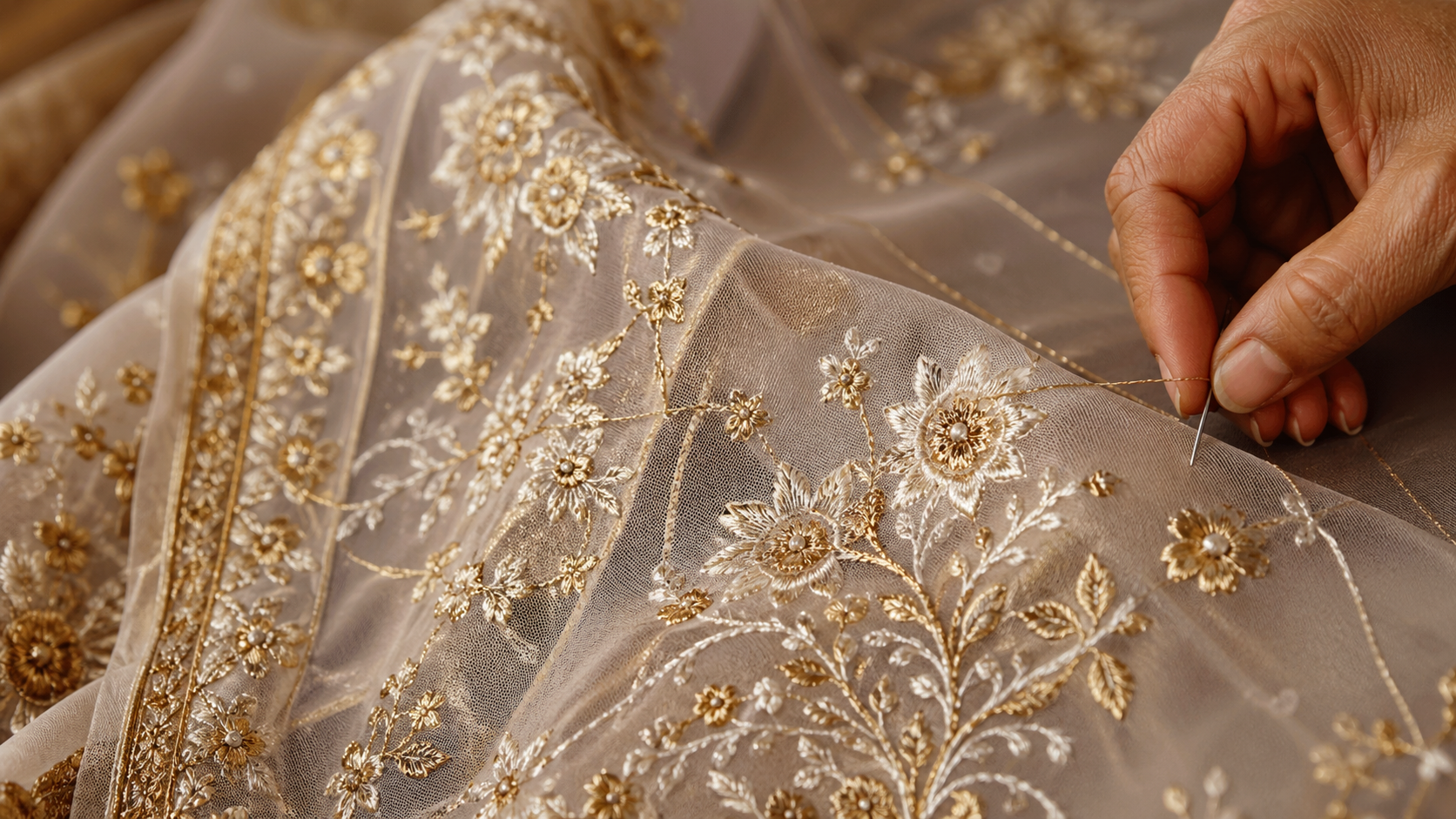
Embroidery is the soul of Pakistani clothing. At Stitch Pearl it is the work of a small team in Karachi, and it is worth saying exactly how a piece gets made — including which parts are machine work and which are done by hand.
The craftsmen
Our embroidery is done by Qadri and his team. Years on the same fabrics teach things a specification cannot: how cotton, organza and chiffon each pull against a stitch, and where a dense motif will sit stiff instead of soft.
It starts with punching
Every batch starts with Naveed's design punching — the digitised pattern that maps every stitch before a single thread is laid. That pattern drives the embroidery machine. Getting it right is the difference between a motif that reads crisp across ten suits and one that thickens on the curves, and it is where most of the design judgement actually happens.
Machine motif, hand finish
The embroidery itself is machine-embroidered. We chose that deliberately: a machine repeats a motif identically across every panel of a suit and across every suit in a batch, and consistency is what a customer notices when a dupatta is held next to a shirt.
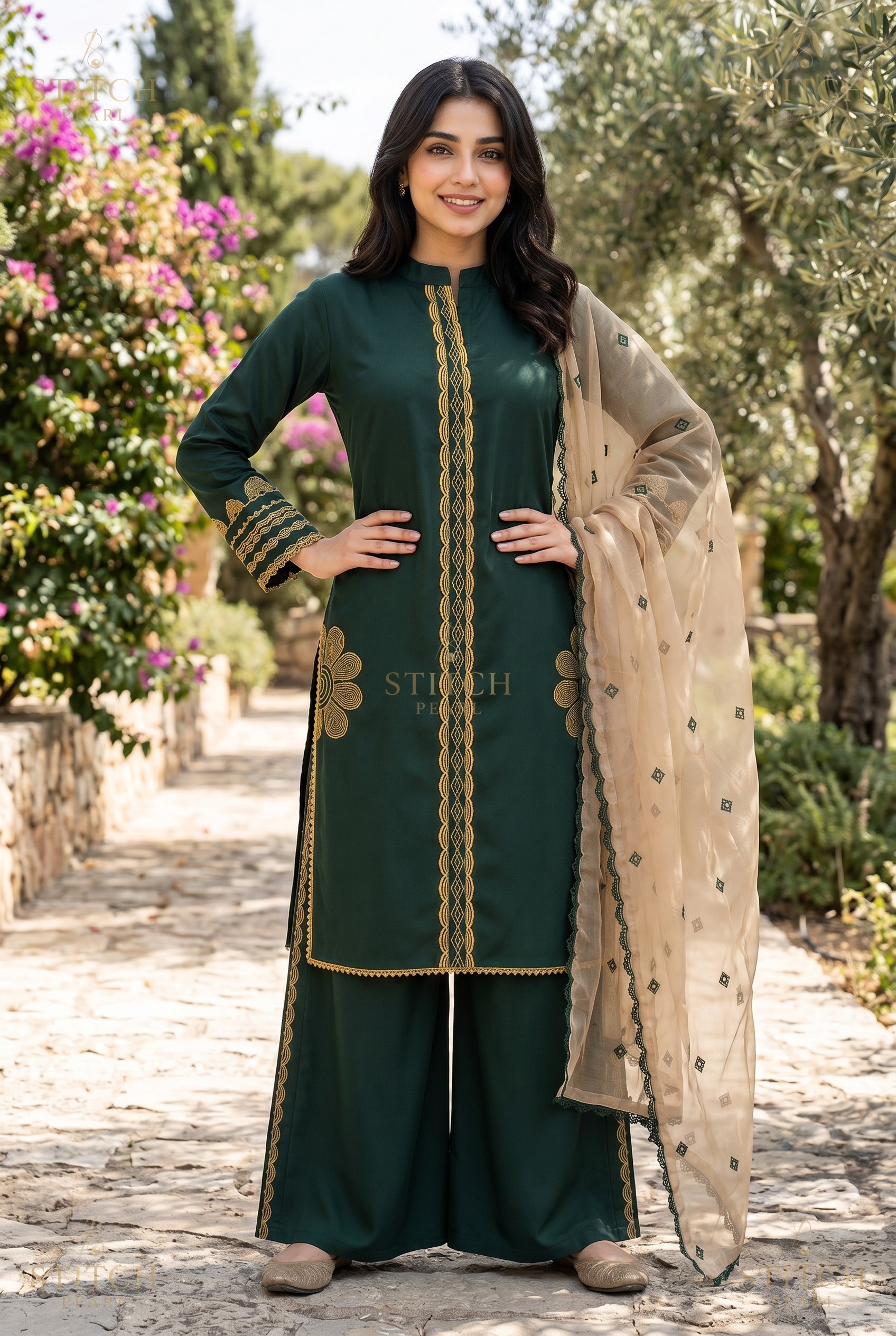
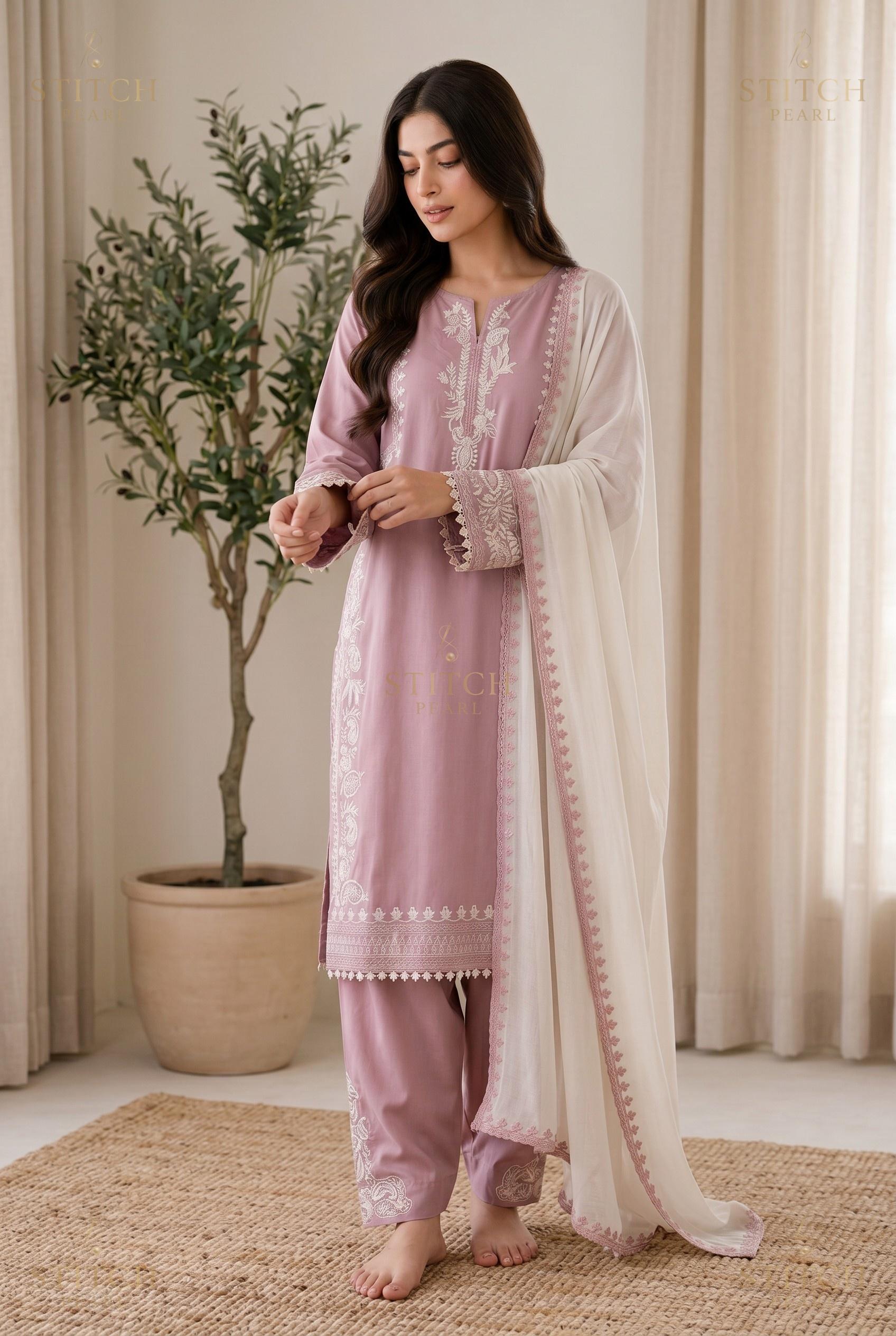
Everything around the motif is hand work. Cutting, stitching, the seams, hems and trims, the organza and chiffon detailing, the lace on a dupatta border — all of it done by hand in our workshop. That is precisely what hand-finished means on our product titles: hand craftsmanship in the make, machine accuracy in the motif. We would rather state that plainly than let a word do work it has not earned.
Organza is the hard part
Organza is the most delicate fabric we embroider on. It needs steady tension — too tight and the fabric puckers, too loose and the design sits flat and lifeless. We source our organza through Global Traders (Allure Collection) and allocate it carefully to each article, because a bad metre is not obvious until the motif is already on it.
Cotton meets thread
Our cotton base is chosen for how it holds thread. Premium cotton takes embroidery cleanly and ages well through wear and washing, which matters more than it sounds: a motif that looks sharp in the studio and puckers after two washes was never good work.
Three inspections
A batch of 24 pieces takes the team several days of focused work, and every garment is checked at three stages — fabric, embroidery, and stitching. If a piece does not pass, it does not ship. Being small is the only reason that is possible.
When you run your fingers over a Stitch Pearl panel, you are feeling a machine-set motif on fabric that was cut, stitched and finished by hand, and checked three times before it left Karachi.